

LEARN
Knowledge is Power: Understand and Combat Sexual Violence
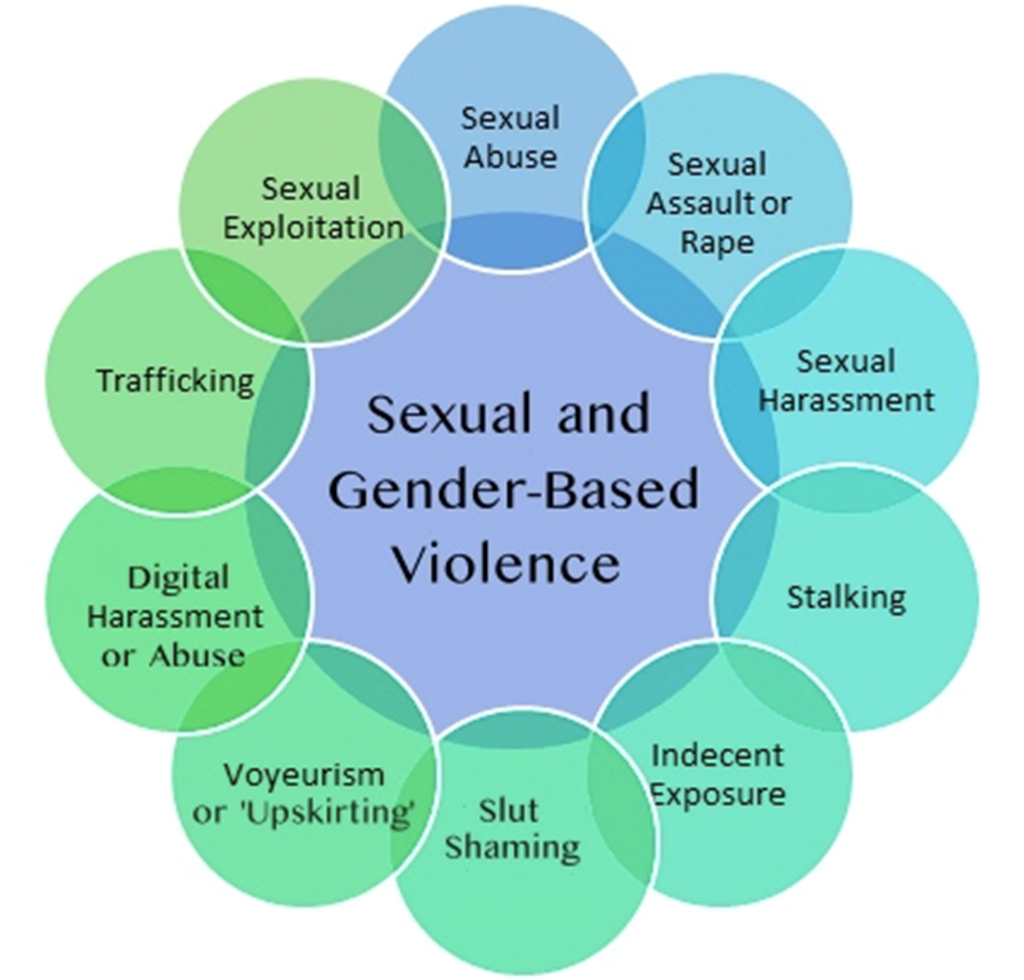
(Source: Ringrose, Jessica, Mendes, Kaitlynn, Horeck, Tanya, Desborough, Karen, and Milne, Betsy (2023) “Equipping Young People to Navigate Post-digital Sexual Violence Final Report)
first things first.
What is Sexual Violence?
Sexual violence is a term to describe any sexual activity or act that happened without consent that was unwanted or involved one or more of the following: pressure, manipulation, bullying, intimidation, threats, deception, force. The term ‘sexual violence’ is an all-encompassing term that refers to a range of acts, some of which are criminal offences, like sexual assault, rape, and sexual abuse.
Some acts aren’t as yet legally defined as crimes, e.g., street harassment, but they are still harmful.
Sexual violence happens in many ways and spaces and that the different categories overlap. It is not only physical e.g sexual assault and rape – it includes emotional, interpersonal, verbal, digital sexual violence etc. – e.g. sexual comments, leering, following, upskirting, slut-shaming, sharing nudes, etc. These are only examples, and they do not cover the range of types and experiences of sexual and gender-based violence.
There is no hierarchy between these examples and they cannot be ranked according to perceived harm. ALL forms of sexual and gender-based violence are capable of causing harm and are unique to the individual’s experience.
moving on...
What is Digital Sexual Violence?
A range of acts and activities where digital technologies are used to enable sexually based harms on and offline.
There are 3 types of digital sexual violence.
Unsolicited Sexual Images- Any sexual content shared online which is not wanted by the recipient is image-based sexual harassment. This can include: unsolicited dick pics, ‘cyberflashing’, pornographic images from bots, unwanted nude images/videos.
Digital Sexual Pressure & Coercion- Being pressured or forced to engage in sexual activity on or offline via digital technologies is also image-based sexual harassment. This can include: pressurising, blackmailing or bribing someone to send nudes.
Non-consensual Taking or Sharing of Nudes- Creating, sharing or threatening to share someone’s nudes without their consent is image-based sexual abuse (sometimes called ‘revenge porn’). Can include: forwarding a nude in a group chat, showing a nude of someone else on a phone, upskirting.
(Source: Ringrose, Jessica, Mendes, Kaitlynn, Horeck, Tanya, Desborough, Karen, and Milne, Betsy (2023) “Equipping Young People to Navigate Post-digital Sexual Violence Final Report)
that's not all.
What is bullying and harassment?
Bullying can include hurtful language that targets an individual or group of people, trolling, spreading rumours, and excluding people from online communities.
Harassment is when the bullying behaviour is repeated and intended to cause distress. Repeated harassment should be reported to the police.
What counts as bullying and harassment?
If someone targets you online by saying mean things, trolling, spreading rumours or excluding you, this counts as bullying (or ‘cyberbullying’). Bullying can happen on social media platforms like Facebook or whatsapp. Online bullying might also occur alongside abuse in the school or workplace by peers, bosses or colleagues.
( source: reportharmfulcontent.com)
What is consent?
Consent means agreeing to something by choice and having both the freedom and capacity to make that choice.
It is NOT consent if:
- Someone was asleep, unconscious, drunk, drugged or ‘on’ drugs.
- Someone was pressured, manipulated, tricked or scared into saying yes.
- Someone was too young or vulnerable to have the freedom and capacity to make that choice.
Consent can be withdrawn at any time, including during a sexual act. Just because someone consented to something before doesn’t mean they consented to it happening again (Source: Rape Crisis England & Wales (RCEW)
Think Before You Share : This campaign by Internet Watch Foundation aims to help young people understand the harm of sharing explicit images and videos of themselves, and others . Learn more (https://www.thinkbeforeyoushare.org/teenagers
Acknowledgment:
This platform was envisioned by some secondary school students in Nigeria, supported by Taibat Hussain during her PhD research. Without their time and the courage to share their experiences, this platform would not exist today. The educational resources have been curated from a variety of online sources, including organisations dedicated to improving the well-being of young people. The platform was built by thedamii.